Residents trust property teams with access to their homes. That trust depends on clear entry rules, responsible key handling, and accountability for everyone with access.
A proposed Miya’s Law in Georgia is bringing renewed attention to these responsibilities. With legislation planned for the 2027 session, Georgia property managers can follow the proposal and review their own resident-safety practices.

What Is Miya’s Law?

Miya’s Law is named in memory of Miya Marcano, a 19-year-old student who was killed in Florida in 2021. A maintenance employee at her apartment community used a key fob to enter her home without permission. Her death prompted efforts to strengthen protections for residents.
Florida enacted Miya’s Law in 2022. Its provisions address employee background screening, records of key issuance and return, written key-handling policies, and notice before entry for repairs.
The Georgia effort builds on the broader conversation about who can access a resident’s home and what safeguards should support that access.

Is Miya’s Law in Effect in Georgia?

The Georgia measure discussed here remains a proposal, not an enacted law.
In September 2026, State Representative Imani Barnes announced plans to formally introduce Miya’s Law during Georgia’s 2027 legislative session. Her announcement describes a proposed requirement for landlords to provide tenants with at least 24 hours’ notice before entering residential rental units for activities such as inspections, repairs, improvements, services, and showings.
The announcement does not establish a new compliance deadline. The scope, exceptions, enforcement provisions, and effective date would depend on the legislation ultimately passed and enacted.

What Protections Are Advocates Seeking?

The public petition supporting Miya’s Law in Georgia calls for protections that include:
  • Background checks and sex-offender screening for apartment maintenance staff.
  • Written key-control policies and records of access to master keys and key fobs.
  • At least 24 hours’ notice before non-emergency maintenance entry.
  • Employment restrictions related to certain criminal convictions.
  • Oversight, recordkeeping, and enforcement.
These are the protections requested in the petition. They should not be treated as a confirmed summary of a final Georgia bill or as current Georgia requirements.
Property managers should follow the official legislation once it is introduced to understand which provisions it includes and which properties and employees it would cover.

Why Key Accountability Matters

Notice procedures and key accountability serve related purposes. Notice helps residents understand when someone plans to enter their home. Key-control procedures help management oversee who can obtain a key, why they need it, and whether they returned it.

HandyTrac helps property teams put that accountability into practice. Instead of relying on handwritten logs or memory, managers can review recorded key activity and follow up on outstanding keys.

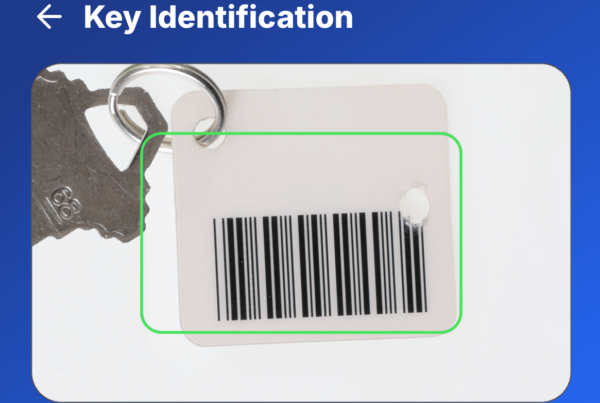
Track individual responsibility. An audit trail records who checked out a key, the recorded reason, and when it was returned, helping managers investigate questions about key activity.

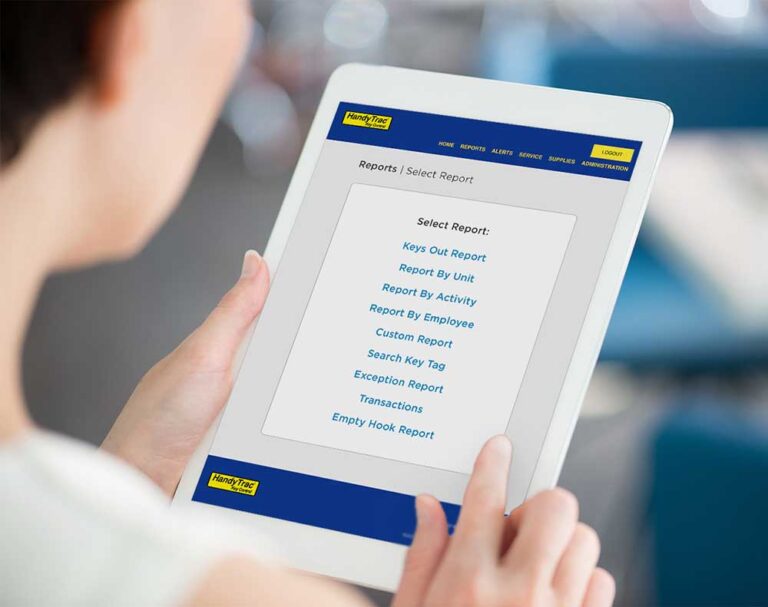
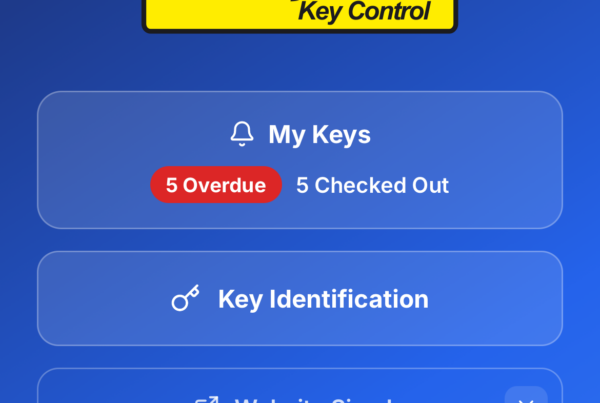
See which keys are still out. The Keys Out Report gives teams visibility into outstanding keys so they can follow up with the responsible employee or vendor.

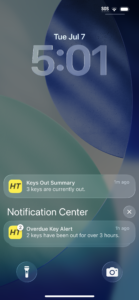
Receive reminders to follow up. Configured key-out summaries and overdue-key notifications help managers stay informed without repeatedly running reports.

Make key locations unpredictable. Random Key Rotation assigns a returned key to a random available hook, so someone cannot reliably locate it again simply by remembering its previous position.

Review activity remotely. Online reporting and the HandyTrac App help managers maintain oversight while away from the property.

These tools support consistent procedures and reduce the time spent tracking down keys. A checkout record documents key access; it does not independently confirm entry into a residence or delivery of the required notice. Property teams should coordinate key control with resident communications, work authorization, and entry documentation.

Questions worth reviewing include:

  • Who is authorized to access each key?
  • Is every checkout assigned to an individual employee?
  • Is the reason for checkout documented?
  • How are vendor keys issued and returned?
  • Who follows up on overdue or missing keys?
  • How quickly is access removed when an employee leaves?

With clear policies and accessible records, property teams can identify gaps, address outstanding keys, and maintain stronger oversight of access to residents’ homes.
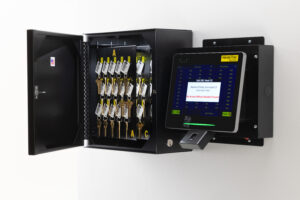
unit notes on the compact cabinet help improve key accountability in smaller communities

What Georgia Property Managers Can Review Now

Communities can strengthen their procedures while following the proposed legislation. The following are operational recommendations, rather than a statement of new Georgia legal requirements.

Review Your Written Key-Control Policy

Document how you store, issue, return, and audit keys. Include procedures for vendors, emergency access, lost keys, and employee departures.

Limit Access According to Job Responsibilities

Apply the principle of least privilege by providing each employee with only the access needed for their role. Review permissions when responsibilities change.

Coordinate Notice and Maintenance Workflows

Review how your team provides and records resident notices under applicable law and lease terms. Make sure employees understand the difference between permission to retrieve a key and authorization to enter a home.

Review Key Activity Regularly

Assign responsibility for reviewing outstanding keys, unusual activity, and incomplete records. Records are most useful when someone consistently reviews and acts on them.

How Electronic Key Control Can Support Your Team

Electronic key control can help property teams maintain more consistent records and oversee key activity.
HandyTrac systems provide an audit trail and reporting that help managers review who checked out a key, the recorded reason, and when it was returned. These tools can support a written key-control policy and routine management oversight.
Technology works best alongside employee screening, training, resident-notice procedures, and consistent follow-through. A key-control system alone does not establish compliance with every tenant-safety requirement.

Following Miya’s Law in Georgia

As Georgia’s proposal moves toward the 2027 legislative session, property managers should watch for the official bill text and subsequent amendments.
Residents deserve thoughtful safeguards around access to their homes. Reviewing key accountability today gives property teams a practical starting point.
To learn more about the advocacy effort, read the petition supporting Miya’s Law in Georgia. To review your community’s key-handling procedures, explore HandyTrac’s Key Control Policy Checklist.
Legislative status checked October 30, 2026. This article provides general information, not legal advice. To keep up with more industry news, subscribe to our email newsletter.